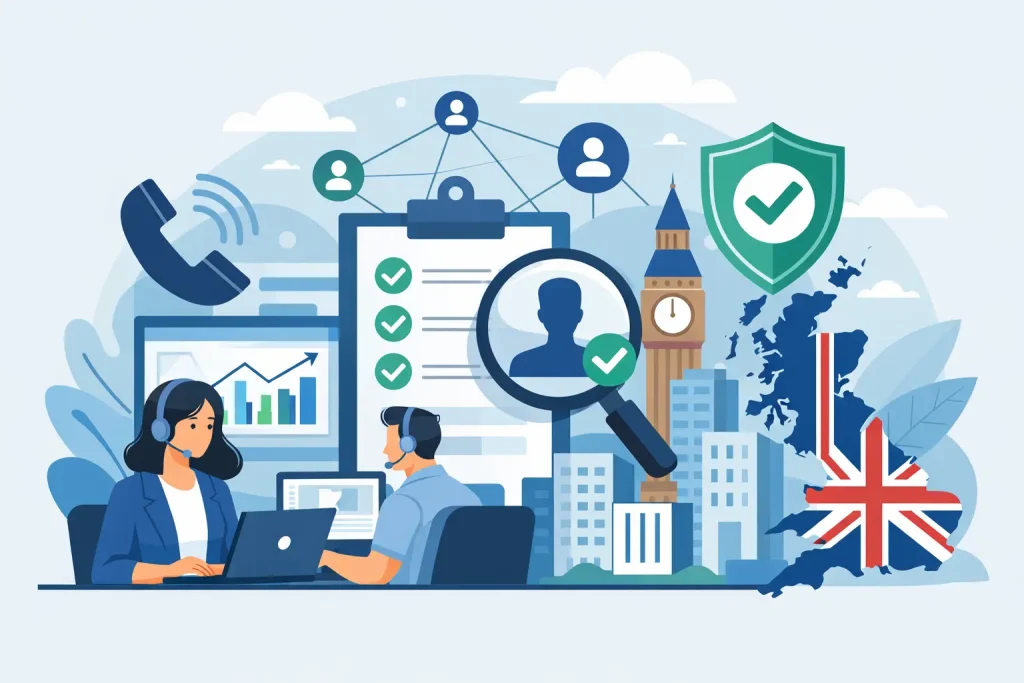
A calling team can make hundreds of dials in a week and still have little to show for it if the underlying records are wrong. Verified telemarketing data UK buyers can use with confidence is not simply a large file of phone numbers. It is a targeted, current selection of business contacts that gives each call a credible reason to happen.
For sales teams working to a budget, poor data creates costs far beyond the price of a list. Reps spend time navigating switchboards, speaking to companies outside the target market, or asking for people who left months ago. A tailored, checked dataset helps reduce that waste and puts the campaign in front of the right businesses, departments and decision-makers from the outset.
What verified telemarketing data should include
The term “verified” is used widely, so it is worth being precise about what you are buying. A useful telemarketing database starts with clear selection criteria and is then checked, maintained and supplied for a defined campaign purpose. It should not be presented as a permanent, infallible record of every business in the market. Companies change, contacts move roles and telephone arrangements evolve. What matters is the quality of the source, the recency of the data and the supplier’s willingness to tailor it properly.
For a B2B campaign, the most valuable records typically combine company name, address, main telephone number, sector classification, employee size or turnover band, and relevant contact information. Depending on the campaign, that could mean a named managing director, finance director, operations manager, IT lead, HR manager or facilities contact. The right job title depends on what you sell. Calling every director at every company is not targeting – it is an expensive shortcut.
A well-built file also allows practical segmentation. You may need firms in the North West with 20 to 250 employees, independent care providers, construction companies tendering for work, or multi-site organisations with a specific facilities requirement. These filters turn a general calling exercise into a controlled commercial campaign.
Why tailored data produces better call outcomes
Volume can look attractive when comparing data suppliers, but large generic databases often conceal a basic problem: most of the records are not suitable for your offer. A software provider targeting manufacturing firms has little commercial use for thousands of unqualified contacts across unrelated sectors. The same applies to agencies, professional service firms, equipment suppliers and B2B specialists with a clearly defined buyer.
Tailored telemarketing data gives managers greater control over three things: who gets called, why they are being called and how results are measured. A campaign can be split by region, vertical market, company size or job function, then tested in manageable batches. If one segment responds better, budget can be directed towards it rather than being lost across an undifferentiated list.
This matters especially where the sales cycle is long. A single qualified conversation with a facilities director, procurement lead or business owner can be worth substantially more than dozens of calls to unsuitable organisations. Accurate targeting cannot guarantee appointments or orders, but it improves the odds that your team is speaking to companies with a realistic reason to listen.
How to assess verified telemarketing data UK suppliers
Before purchasing telemarketing data, ask how the supplier will define your audience. A credible provider should begin with your product, ideal customer profile and campaign objectives, rather than immediately offering the largest possible record count. It should be possible to discuss exclusions too. If you already have a customer database, competitors, existing prospects or sectors that do not fit, these should be removed before calling begins.
Look closely at the selection fields available. Job title alone is often not enough, because seniority structures vary widely between small businesses, mid-market companies and larger organisations. A business owner may make the buying decision in a 15-person firm, whereas a head of department or procurement contact may be more relevant in a national organisation. The data should reflect that reality.
Ask whether the records can be supplied in a format that works with your CRM or calling system, and whether fields are clearly labelled. A clean, usable file prevents operational delays and makes it easier to track outcomes such as no answer, wrong number, not interested, call back, qualified lead and appointment. Good campaign reporting starts with orderly data.
It is also sensible to buy a quantity that supports testing rather than committing the full budget to an unproven audience. A focused initial segment can reveal whether the offer, script and contact profile are aligned. If it performs, the campaign can be expanded with a clearer basis for investment.
Questions worth asking before you buy
Use these questions to compare a B2B contact database for sale on more than headline volume:
- Can the data be selected by sector, geography, employee size, turnover and job role?
- Are named contacts available where they are relevant to the campaign?
- How recently has the data been checked and what quality processes support it?
- Can existing customers, prospects and unsuitable sectors be suppressed?
- Is the list supplied for your specific telemarketing objective rather than as a generic bulk file?
- Can the supplier provide practical advice on the best contact profile for your offer?
The answers reveal whether you are buying a campaign asset or simply purchasing records.
Compliance is part of data quality
GDPR compliance should be treated as a working requirement, not a badge placed on a spreadsheet. UK B2B telemarketing can be carried out in certain circumstances, but businesses remain responsible for ensuring their activity is lawful and properly managed. That includes checking the relevant rules around the Telephone Preference Service and Corporate Telephone Preference Service, handling objections promptly and maintaining clear suppression processes.
Data quality supports compliance because it helps your team identify the organisation and contact they are calling, record preferences accurately and avoid repeated unwanted contact. A responsible campaign also needs a clear call purpose, trained callers and a process for removing records where requested. The data supplier can provide compliant, carefully sourced information, but the caller and organisation using it must operate the campaign appropriately.
There is a commercial reason to take this seriously. Respectful, relevant calls protect your brand. Calling the wrong person repeatedly or failing to act on an opt-out does not just create compliance risk – it damages the prospect relationship before your sales conversation has properly started.
Match the data to the calling strategy
The best database cannot repair a weak proposition, but it gives a capable team a proper starting point. Before the file is loaded into a dialler or CRM, agree the reason each segment is being contacted. A financial service aimed at growing businesses may need different messaging for firms with 10 employees and firms with 200. An office fit-out supplier might prioritise companies showing relocation, refurbishment or expansion indicators rather than every office-based business in a postcode area.
It is worth preparing a short call framework around the prospect’s likely priorities. For example, a facilities manager may care about service continuity and cost control, while a managing director may respond to commercial impact and reduced operational burden. The list supplies the targeting intelligence; the call needs to make that intelligence useful.
Measure list performance fairly. Contact rates, conversations, qualified opportunities and appointments should be reviewed by segment rather than judged only as one campaign total. Some sectors answer more readily at different times, while named-contact data may produce fewer dials but more meaningful discussions. The right measure is return on investment, not the biggest apparent calling volume.
Buy data built for the campaign, not the catalogue
When choosing verified telemarketing data UK businesses should focus on relevance, recency and usable segmentation. A list selected around your actual prospect profile gives sales teams a better chance of reaching the right organisations without wasting time on records that were never likely to convert.
AD Marketing Ltd supplies tailored B2B marketing data with the practical support needed to shape a more focused campaign. Whether you need named decision-makers, company telephone data, sector-led targeting or a tightly defined geographical audience, the starting point should be the customers you want to win and the conversations that can move them closer to a purchase.
A carefully chosen data file will not make every call successful. It will, however, ensure your team spends more of its time having calls that are worth making.