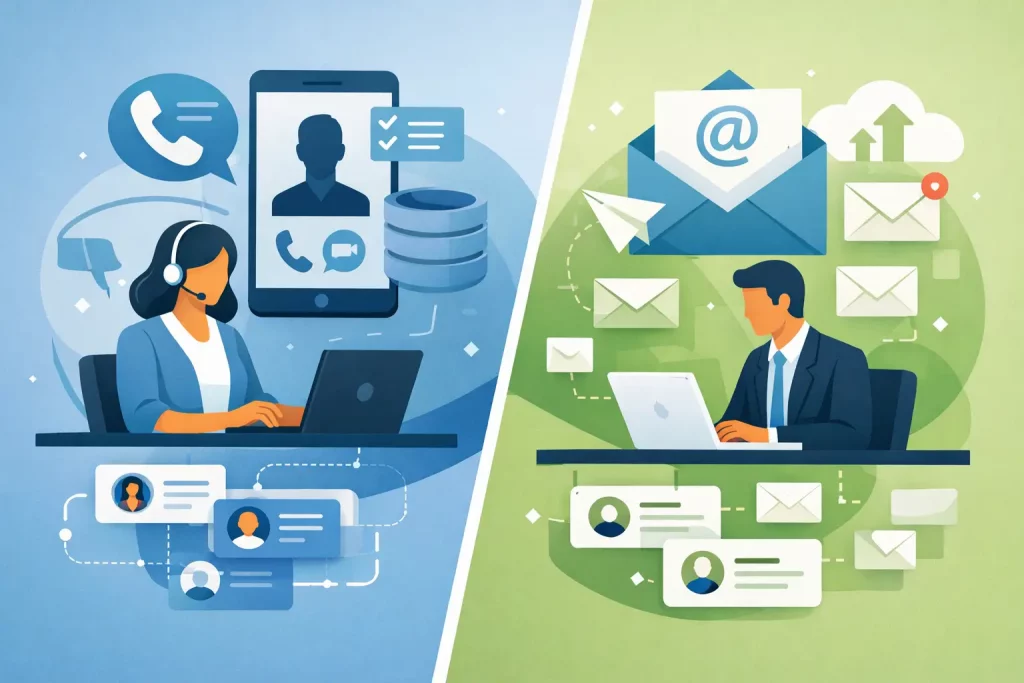
When a campaign underperforms, the problem is often not the message. It is the data behind it. That is why the question of telemarketing data vs email data matters so much for businesses buying prospect lists. If you are investing budget into outbound activity, the right contact data will shape response rates, sales conversations, follow-up speed and overall return.
The short answer is that neither dataset is automatically better. It depends on how you sell, who you target, what your sales cycle looks like and how quickly you need results. A strong telemarketing file can generate direct conversations and immediate qualification. A strong email file can deliver scale, nurture prospects over time and support lower-cost outreach. The commercial decision is not about preference. It is about fit.
Telemarketing data vs email data: what is the difference?
Telemarketing data is built for direct phone-based outreach. In a B2B setting, that usually means company name, named contact, job title, switchboard number, direct dial where available, location, sector, size and other selection criteria that help a sales team prioritise calls. The value is straightforward. It gives your team a route into decision-makers and a basis for live conversation.
Email data is built for digital outreach and campaign automation. A typical email marketing file includes company details, named contacts, job titles and business email addresses, often with segmentation fields that help shape campaign messaging. The strength here is volume and repeatability. A good email list allows you to send targeted campaigns, test offers and build sequences around buyer intent.
In practice, many businesses need both. But if you are buying data specifically for one channel, you need to be clear about the outcome you want from the campaign.
When telemarketing data gives you the stronger return
If your offer is high value, complex or consultative, telemarketing data often performs better than email alone. A phone conversation lets your team qualify quickly, handle objections in real time and book appointments without waiting for a prospect to click or reply. That matters when each lead is worth a meaningful amount of revenue.
Telemarketing is also useful where timing matters. If you are targeting firms with an urgent need, such as office moves, fit-out projects, specialist business services or contract renewals, a call can reach prospects while the requirement is still active. Email may support that process, but it rarely replaces the speed of direct contact.
There is another practical advantage. Telemarketing data can still deliver value even if a named individual is unavailable. A strong company record with switchboard detail, departmental information and accurate firmographics gives experienced callers a route in. That flexibility can make a real difference in sectors where job changes happen frequently.
That said, phone-based outreach is more resource-heavy. You need trained staff, a clear calling plan and realistic expectations around volume. Buying telemarketing data without the internal capacity to act on it quickly can waste a good list.
When email data is the better commercial choice
Email data is often the better option when you need broader reach, lower cost per contact and a campaign structure that can run over time. It suits businesses with clear value propositions, strong creative, useful content or offers that can be understood without a live sales conversation.
For many B2B marketers, email data works best at the top and middle of the funnel. It allows you to test sectors, job functions and messages before committing more budget. You can identify opens, clicks and replies, then pass warmer prospects into sales follow-up. That makes email lists particularly useful for market testing and ongoing lead generation.
Email also gives you cleaner reporting at scale. You can compare subject lines, offers, sectors and audience segments quickly. If your business relies on repeat campaigns and incremental optimisation, email data provides a practical framework.
The trade-off is that inbox competition is fierce. Even a well-targeted email list will underperform if the messaging is weak or the audience is too broad. Poor email data is especially expensive because it can damage deliverability, waste sending costs and produce misleading performance figures.
Telemarketing data vs email data for lead quality
Lead quality does not come from the channel alone. It comes from how well the data has been selected, verified and matched to your offer.
A telemarketing list may generate better quality conversations because your team can qualify live. You can establish need, budget, authority and timing in a single call. That makes phone data appealing to sales-led organisations that want fewer, stronger opportunities rather than larger volumes of lighter engagement.
An email list, however, can still produce high-quality leads if the targeting is precise. Named contacts by function, seniority, industry, location and company size can produce highly relevant responses, especially where the campaign speaks directly to a specific business pain point. The problem is not email as a channel. The problem is often generic list selection.
This is where tailored data supply matters. A segmented, campaign-ready file built around your actual buyer profile will almost always outperform a large, unfocused database. Buyers looking to purchase email marketing lists or telemarketing records should focus less on raw record count and more on whether the list reflects the market they actually want to win.
Compliance, accuracy and campaign risk
For UK businesses, compliance is not an optional extra. It sits at the centre of data purchasing decisions. Whether you are buying telemarketing data or email data, the records need to be sourced and handled appropriately for business marketing activity.
Email data often attracts closer scrutiny because the wrong records can create immediate delivery and compliance problems. Bounce rates, spam complaints and poorly matched audiences can all weaken campaign performance. If you are buying business email data, accuracy and lawful marketing use are central to protecting your budget.
Telemarketing data carries its own risks if quality is poor. Out-of-date contacts, wrong job titles and incorrect numbers waste sales time quickly. The cost is not just media spend. It is staff time, morale and missed opportunity.
That is why many buyers prefer a specialist supplier rather than a generic bulk list seller. Tested data, tailored selection and practical guidance on audience criteria reduce the risk on both sides. For many organisations, that support is just as valuable as the records themselves.
Which data should you buy first?
If your team is sales-led and comfortable on the phone, telemarketing data is often the stronger first purchase. It can produce immediate conversations, faster qualification and a clearer sense of whether a market segment is commercially viable. This is particularly true for niche B2B services, higher-ticket offers and appointment-led selling.
If your business needs volume, lower entry cost and repeatable outreach, email data is usually the better place to start. It allows for wider testing and can support both direct lead generation and longer nurture activity. It is also useful if your internal sales resource is limited and you need marketing to do more of the early-stage work.
If budget allows, the most effective option is often a combined approach. Use email to build awareness and identify engaged prospects, then use telemarketing to follow up and qualify. Or start with calls to validate messaging, then scale the best-performing proposition through email. The strongest campaigns rarely treat channels in isolation.
How to choose between telemarketing data vs email data
Start with your sales process, not the dataset. Ask how prospects usually buy from you. If deals tend to move after a conversation, phone data deserves priority. If prospects respond well to offers, case studies or repeat touchpoints, email data may be the better fit.
Then look at capacity. There is no value in purchasing a large telemarketing file if no one can call it consistently. Equally, there is little point buying email data if your messaging, send setup and follow-up process are weak. The best data still needs operational discipline.
Finally, be realistic about audience definition. Good suppliers should help refine the brief by sector, geography, employee size, turnover, job title and campaign objective. That step often determines whether a dataset performs or disappoints.
For buyers comparing options, the decision on telemarketing data vs email data should come down to commercial use. What will your team actually do with the records in the next 30 to 90 days? The clearer that answer, the better the list purchase.
AD Marketing Ltd works with businesses that need more than a spreadsheet of names. The value is in supplying tailored, verified data that fits the campaign and supports better results from the start.
A good list should not just fill your CRM. It should give your team a practical advantage, whether that means more conversations, better response rates or a shorter route to revenue.