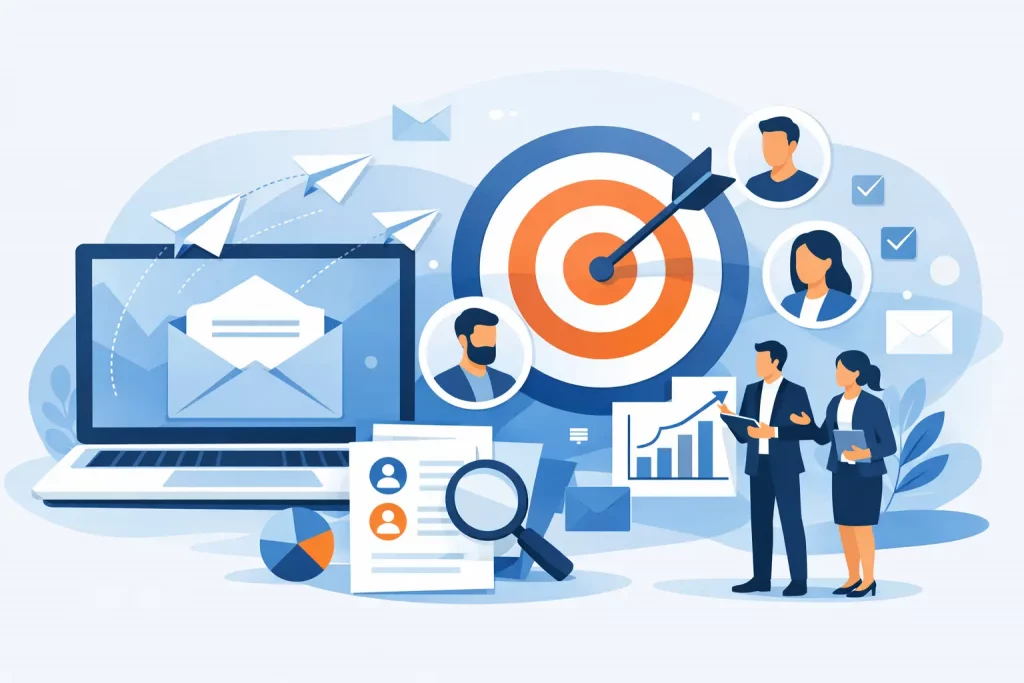
Every wasted send has a cost. Not just the price of the data, but the time your team spends building campaigns, the opportunity lost on poor-fit prospects, and the damage done when irrelevant outreach lands in the wrong inbox. That is why tailored business email lists matter so much more than bulk records sold on volume alone.
For businesses buying data to support lead generation, email marketing or wider outbound activity, the real question is not whether you can get a list. It is whether the list matches the campaign closely enough to produce a return. If your targeting is too broad, your response rates suffer. If your contact data is out of date, your deliverability drops. If your criteria are vague, your sales team ends up working through names that were never likely to convert in the first place.
What tailored business email lists actually mean
A tailored list is built around your market, your offer and your campaign objective. That sounds obvious, but many data buyers still end up with a generic database filtered only by a broad sector or company size. In practice, that usually means too many records that look relevant on paper but are commercially weak when used in a live campaign.
Tailored business email lists should be selected using criteria that reflect how you sell. That may include industry, employee size, turnover, location, job function, seniority, named decision-makers, number of sites, business type or current business triggers. The more closely the data reflects your ideal customer profile, the more useful it becomes.
This is particularly important in B2B sales, where one campaign may need managing directors in independent engineering firms, while another requires finance leads in multi-site healthcare groups. Treating both as the same market wastes budget. A tailored approach gives you a more practical route to relevance.
Why generic lists usually underperform
A cheap bulk file can look attractive at first glance. The record count is large, the price per contact appears low, and it gives the impression of scale. The problem is that scale without selection often increases waste rather than opportunity.
If half the data falls outside your true target market, your campaign cost per viable prospect rises immediately. If the contacts are not aligned to the buying role, your messaging loses impact. If the list has not been properly verified, your team starts spending money on outreach that never had much chance of landing well.
There is also a strategic issue. Poor targeting can distort campaign decisions. A business might assume the market is unresponsive when the real problem is list quality or weak segmentation. That leads to good channels being abandoned for the wrong reasons.
How tailored business email lists improve ROI
The strongest case for buying tailored data is simple: better targeting usually leads to better campaign efficiency. That does not mean every campaign will perform brilliantly, because offer, messaging, timing and follow-up all matter. But it does mean your spend is directed at a more relevant audience from the start.
When the data is selected properly, email content can be written with more precision. A facilities management company targeting office relocations needs a different audience from a software provider selling into secondary schools. Better segmentation improves relevance, and relevance improves engagement.
Sales teams benefit as well. Instead of calling through a broad and uneven list, they can work from contacts that fit agreed criteria. That shortens prospecting time and helps teams focus on opportunities with stronger commercial potential. For businesses under pressure to show return quickly, that matters.
There is also less waste across the campaign process. Fewer irrelevant records means fewer unnecessary sends, fewer dead-end conversations and more confidence in your reporting. Your results become easier to interpret because the data is cleaner and the audience is more intentional.
The data points that make a list commercially useful
Not every buyer needs the same fields, and that is exactly why tailored selection is valuable. Some campaigns are driven by named contacts and direct email addresses. Others work better with a combination of business email, telephone numbers and company postal data so teams can run coordinated outreach.
The most useful tailored lists often include a mix of firmographic and contact-level detail. Industry classification, turnover, employee count and geographic area help define the business. Job title, function and seniority help identify the person most likely to influence a purchase.
For some sectors, additional criteria make a significant difference. Multi-academy trusts, healthcare providers, local authorities, construction firms and office movers all have buying patterns that can be refined further. If your supplier can only sell fixed lists, you are forced to fit your campaign around the data. A better model is to shape the data around the campaign.
Compliance and accuracy are not optional
Buyers looking to purchase email marketing lists are right to ask hard questions about compliance and data quality. If a supplier cannot explain how data is sourced, checked and prepared for marketing use, that is a warning sign.
GDPR compliance matters because poor data practice creates legal and reputational risk. Accuracy matters because it affects campaign performance directly. There is no real value in a large list if a meaningful percentage of records are outdated, duplicated or commercially irrelevant.
A dependable data provider should be clear about what the file contains, how the records have been verified and what level of tailoring is possible. They should also understand that compliance is not a marketing slogan. It is part of the buying decision for any serious business that wants to protect brand reputation while generating leads.
When buying tailored data makes the most sense
There are situations where tailored business email lists are especially valuable. One is when your market is niche and broad category filters are not enough. Another is when your campaign budget is tight and wasted outreach is expensive. Tailored data also makes sense when your sales team needs named decision-makers rather than general company records.
It is equally useful when you are testing a new market. In that case, a carefully defined segment gives you a more reliable read on response than a generic file ever could. You can assess demand, refine messaging and scale with more confidence if the starting data reflects the audience you actually want to reach.
For agencies and outsourced marketers, tailored data helps protect client budgets and campaign credibility. Sending to the wrong audience is hard to defend, especially when the client expects measurable lead generation.
What to ask before you buy
A serious supplier should be able to discuss your target market in practical terms, not just quote a record count. If the conversation starts and ends with volume, you may not be buying the right thing.
Ask how the audience can be segmented. Ask whether named contacts are available. Ask how recent and verified the records are. Ask whether the dataset can be refined by sector, size, job role, geography or specialist criteria linked to your campaign. These are not minor details. They determine whether the list supports revenue generation or simply fills a spreadsheet.
It is also worth asking how the supplier handles unusual briefs. The best data partners do more than sell access to a static database. They help shape the list around the campaign and flag where expectations need adjusting. Sometimes the ideal audience is too narrow and needs broadening. Sometimes a client requests too much volume from a market that only supports a smaller, more accurate file. Good advice at this stage prevents poor buying decisions later.
A better buying decision for serious outbound campaigns
Tailored data is not about buying fewer records for the sake of it. It is about buying more useful records. That difference affects every stage of your campaign, from targeting and messaging to response rates and sales follow-up.
For businesses that rely on outbound activity, tailored business email lists offer a more disciplined way to generate opportunities. They help reduce wasted spend, improve relevance and give teams a stronger base for lead generation. That is why many buyers prefer a specialist provider with practical market knowledge over a faceless bulk list seller.
AD Marketing Ltd works in that specialist space, supplying tailored, verified data for businesses that want better targeting rather than bigger spreadsheets. If you are investing real budget in outreach, the smarter move is usually the same: start with data that fits the job properly, and let the campaign work from there.
The difference between an average campaign and a profitable one often starts long before the first email is sent.