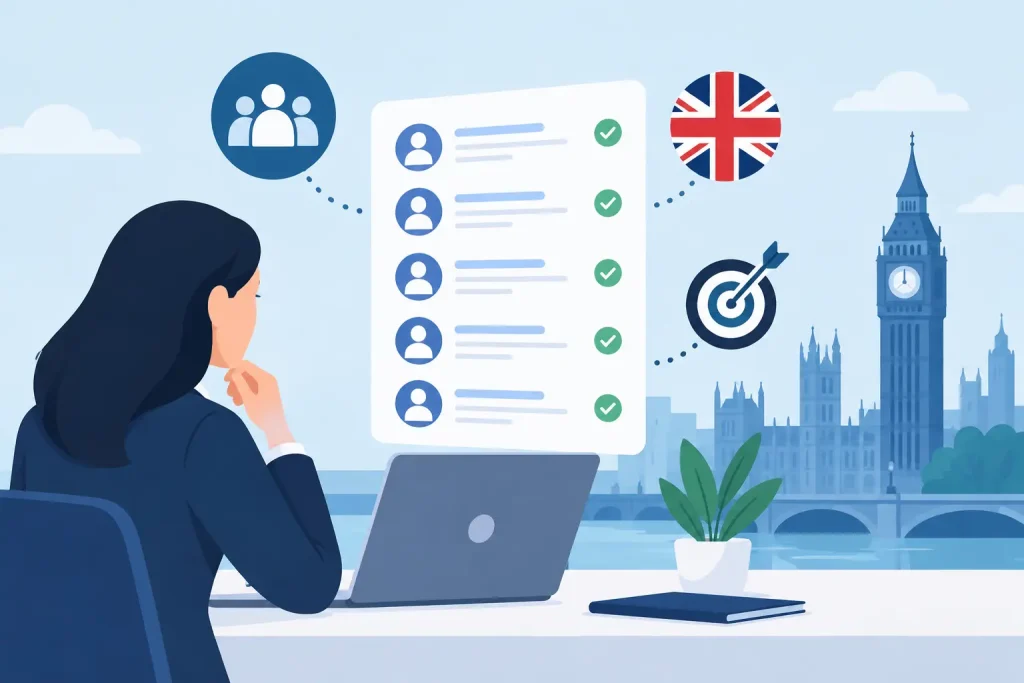
A sales campaign can lose money before the first call or email is sent. If the contacts are irrelevant, out of date or selected without a clear audience definition, even strong messaging will underperform. So, can I buy prospect lists? Yes – provided you buy a properly sourced, campaign-specific list and use it responsibly within UK data protection and electronic marketing rules.
For businesses under pressure to fill a pipeline, purchased prospect data can be a practical route to new conversations. The value does not come from buying the largest possible file. It comes from reaching the right organisations and decision-makers with contact data that supports a specific commercial objective.
Can I Buy Prospect Lists Legally in the UK?
You can purchase prospect lists for legitimate B2B marketing purposes, but buying data does not remove your own compliance responsibilities. A responsible data supplier should be able to explain where records come from, how they are maintained, the legal basis used for processing and the options available for suppression and opt-outs.
Your campaign also needs to be appropriate for the channel. Direct mail, telephone activity and email each have different practical considerations under GDPR and PECR. For example, marketing emails to corporate subscribers may be possible where there is a legitimate interest and a clear opt-out is provided, while sole traders and certain partnerships require greater care. Telephone campaigns must be screened against relevant preference services, internal do-not-call records and stated objections.
The sensible question is not simply, “Can I buy prospect lists?” It is: “Can I buy a prospect list that is relevant, traceable, accurately selected and suitable for the way I intend to contact people?” That is the standard that protects budget, brand reputation and campaign performance.
What a Useful Prospect List Should Contain
A generic database of thousands of businesses is rarely a shortcut to revenue. It may look inexpensive per record, but a low response rate, poor deliverability and wasted sales time quickly make it costly. A useful B2B contact database for sale should be selected around the people most likely to need your offer.
Start with the organisation profile. This might include industry, SIC code, location, employee size, turnover band, number of sites or company type. A software provider selling compliance tools may need named operations or HR contacts at multi-site employers. A commercial interiors firm may instead need active office relocation and renovation leads. The data requirement is different because the buying trigger is different.
Then consider the contact details required for your campaign. Depending on the brief, this could include company name, postal address, switchboard number, direct dial, named decision-maker, job title and business email address. There is no benefit in paying for fields you will not use, but missing a necessary field can limit the campaign before it begins.
For high-value services, named contacts and job-function targeting are usually worth the investment. A managing director at a small firm may be the buyer, whereas a larger organisation could involve procurement, finance, IT and departmental leadership. Tailored selection lets you account for this rather than treating every business as if it buys in the same way.
Buy Data for the Campaign, Not for the Spreadsheet
Before you purchase email marketing lists or telephone prospect data, define the job the data needs to do. Is the objective to create awareness in a new sector, generate appointments, promote an event, support a direct mail follow-up or identify companies with a particular need? The answer determines the selection criteria and the contact format.
A clear brief normally covers your target sectors, the geography you can serve, ideal company size, decision-maker roles, exclusions and intended marketing channels. It should also state whether you need a one-off campaign file or an ongoing supply of fresh prospects. This gives a data provider enough information to advise on realistic volume and likely availability.
Avoid requesting every possible filter simply because it appears available. Narrow selections can improve relevance, but they can also leave too few records to produce meaningful results. A specialist provider should challenge a brief where necessary. For instance, asking for senior contacts in a small niche, within a tiny postcode area and at companies above a high turnover threshold may produce a limited audience. Broadening one criterion may create a more workable campaign without sacrificing relevance.
How to Assess Data Quality Before You Buy
Data quality is not a badge printed on a sales page. It should be evidenced through sensible questions and clear expectations. Ask how often the supplier refreshes records, what verification methods are used, whether records are checked against changes in company status and how bounce, gone-away and opt-out feedback is handled.
For email activity, ask about email validation, the likely age of the data and whether the file is business-focused rather than a mixture of unsuitable contact types. For telemarketing, establish whether telephone numbers have been screened appropriately and make sure your own team follows an up-to-date suppression process. For post, check that address elements and company status are useful for the audience you are trying to reach.
No legitimate supplier can promise that every individual record will be perfect forever. People change roles, organisations move, businesses close and email domains expire. What matters is whether the list has been maintained and selected with care, and whether there is a practical process for dealing with the small percentage of records that will inevitably change after supply.
Also ask for a precise description of what is being supplied. Terms such as “decision-maker data” and “GDPR compliant data lists UK” should be backed by detail: named or un-named contacts, available fields, selection logic, record count, intended use and any licence or reuse restrictions. Clarity at this stage prevents unsuitable data being used for a campaign it was never selected to support.
The Cheapest List Is Rarely the Lowest-Cost Option
A bulk file can appear attractive when the price is divided by a large record count. Yet records outside your service area, organisations below your minimum contract value and contacts with no influence over the purchase all create hidden cost. Your sales team still has to call them, your email platform still processes them and your reporting becomes harder to interpret.
A smaller, more focused list can produce stronger commercial results because it gives your messaging a chance to be relevant. It also makes follow-up more manageable. If a team has capacity for 400 properly researched conversations this month, buying 20,000 untargeted records is not an efficient use of budget.
Measure the outcome against meaningful figures: delivered emails, conversations with suitable contacts, appointments, opportunities, cost per lead and revenue generated. Open rates alone do not tell you whether the list is commercially useful. A campaign that gets fewer opens but reaches buyers with a genuine requirement may be far more valuable.
Make the Data Work Harder After Purchase
Buying prospect data is the beginning of campaign preparation, not the end. Segment the file before contact so that the wording, offer and timing fit the audience. A finance director, facilities manager and business owner may each care about the same service for different reasons. One generic message is unlikely to address all three well.
Match the channel to the proposition. Email can introduce a useful offer at scale, telephone follow-up can qualify interest, and direct mail may help a high-value proposition stand out. When channels are coordinated, ensure your CRM holds clear notes, opt-outs and contact history. This protects the prospect experience and gives the sales team context for every follow-up.
Clean campaign management matters as much as the original selection. Remove objections promptly, record changes of role, identify invalid contact details and feed the learning into the next order. Over time, this creates a more accurate picture of the sectors, job titles and company profiles that convert for your business.
When Tailored Data Is the Better Purchase
If you need UK B2B contacts for a defined market, tailored data is usually the stronger commercial choice. It gives you control over who is included, reduces wasted activity and makes it easier to build a credible message around a genuine prospect need. It is particularly valuable where your offer has a minimum spend, serves a limited geography or depends on reaching a specialist decision-maker.
AD Marketing Ltd can help businesses turn a broad prospecting idea into a focused data brief, combining targeted selection with practical guidance on the fields and volumes that fit the campaign. The goal is not to supply records for their own sake, but to give your team a workable audience for better outreach.
Buy prospect lists when the supplier can explain the data, the selection reflects how you sell and your campaign has a clear reason for contacting each audience. That approach gives every call, email and piece of post a better chance of earning its place in the budget.