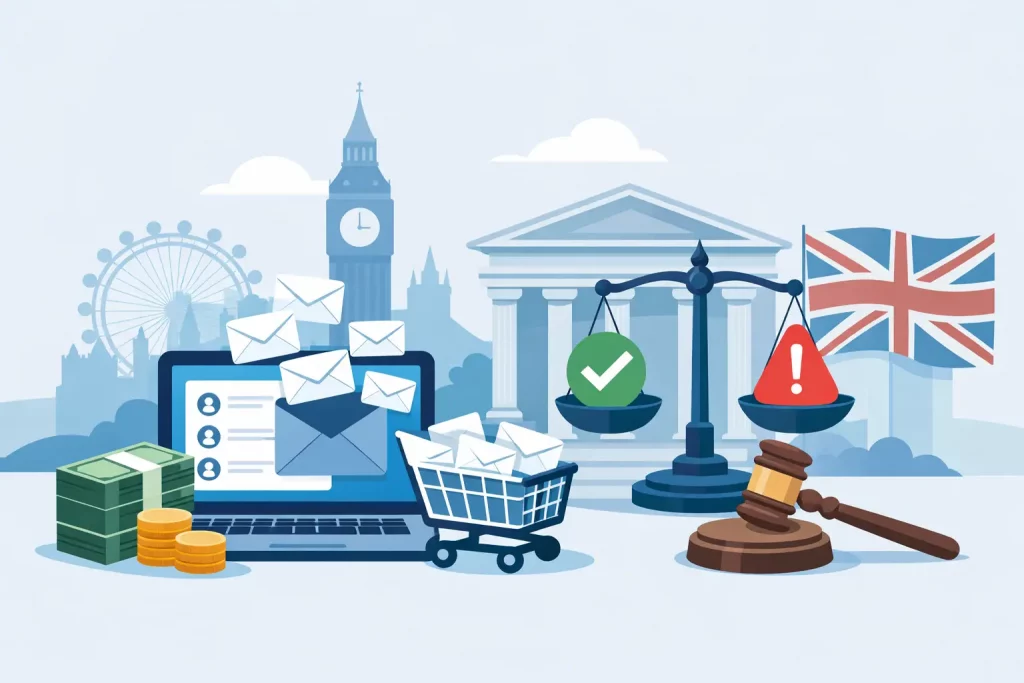
A cheap list of 50,000 contacts can look like a shortcut to pipeline. More often, it becomes an expensive problem. If you are asking are purchased email lists legal, the honest answer is yes, sometimes – but only if the data has been sourced, screened and supplied for lawful marketing use.
That distinction matters. In B2B marketing, buying business data is not automatically unlawful. What matters is who the contacts are, how the data was collected, what permissions or lawful basis apply, and how you plan to use it. If those points are vague, the risk sits with the buyer as much as the seller.
Are purchased email lists legal?
Purchased email lists can be legal, but they are not legal by default. In the UK, the answer depends on data protection law, privacy rules and the specific type of contact data involved.
For business-to-business activity, there is usually more scope to use purchased data than many marketers assume. Corporate contact details, such as named contacts at limited companies, can often be used for direct marketing where there is a valid lawful basis and the individuals are given clear privacy information and a simple way to opt out. That is very different from buying a random bulk file with no evidence of source, no suppression checks and no clarity on intended use.
The practical question is not just whether you can buy a list. It is whether the list was built and supplied in a way that supports compliant email marketing, telemarketing or wider outbound activity.
Why the answer depends on the type of list
Not all purchased data is the same. A targeted B2B contact file compiled for legitimate marketing use is very different from scraped addresses, copied directories or old records passed around by multiple brokers.
If the file contains personal email addresses, sole trader data or consumer records, the compliance position becomes tighter. If it contains business contact details for corporate employees, there may be a lawful route to market, but you still need to handle the data properly. That includes transparency, relevance, suppression management and a clear justification for using the records.
This is where many businesses get caught out. They assume the legal burden sits entirely with the supplier. It does not. If your company sends the campaign, your company is still responsible for how that data is used.
B2B data versus consumer data
For most commercial buyers, the real dividing line is B2B versus consumer marketing. Consumer email data generally demands a much higher level of consent and care. B2B data can be used more flexibly, particularly where the contact works for a limited company and the marketing is relevant to their role.
That does not mean anything goes. Relevance still matters. A managing director at a manufacturing firm should not be dropped into a generic campaign for an unrelated offer just because their address exists on a spreadsheet. Good data supply starts with proper targeting, not just volume.
What makes a purchased list higher risk
The warning signs are usually obvious once you know what to look for. If a supplier cannot explain where the data came from, how recently it was verified or whether it was screened for compliance issues, that is a risk. If the list is described as a one-size-fits-all database covering every sector, every decision-maker and every region, quality is usually weak and legal confidence is weaker.
High-risk lists often share the same traits. They are cheap, broad, outdated and sold with inflated promises around response rates. In practice, they tend to create low engagement, higher bounce rates, complaints and wasted spend.
A legally safer list is usually more selective. It should come with clear sourcing information, realistic coverage, recent validation and a sensible explanation of how the records can be used. That is why serious buyers tend to favour tailored data over anonymous bulk files.
GDPR and privacy rules in practical terms
For UK businesses, GDPR principles still shape how marketing data should be handled. The rules are not only about consent. They also cover lawful basis, transparency, accuracy, relevance and accountability.
In plain terms, if you buy data for email marketing, you need to know why you are entitled to use it. You need to ensure the records are appropriate for your campaign. You need to be open about who you are when you contact people. And you need to offer a clear route to opt out.
That means due diligence before purchase, not after the complaints arrive. Ask what the data fields are, whether the contacts are current, whether suppressions have been applied, and whether the supplier understands the intended channel. Email use, telephone use and postal use are not always treated in exactly the same way.
Lawful basis is not a box-ticking exercise
Many list buyers want a simple yes or no. The reality is more commercial than that. The list has to fit the campaign.
A lawful basis should make sense in context. If you are promoting a relevant business service to a clearly targeted group of corporate decision-makers, that is a different scenario from buying a mass file and sending generic messages to everyone on it. Relevance, targeting and expectation all matter. The more precise the audience selection, the stronger your position tends to be.
How to buy purchased data more safely
If you are going to invest in purchased email data, buy it like a serious marketing asset rather than a commodity. Start with your market, not the file size. Sector, employee size, turnover, region, job function and named responsibility will usually do more for results than sheer record count.
Then test the supplier properly. Ask how the data is sourced, how often it is refreshed and whether it has been used successfully for B2B campaigns. Ask whether the broker can tailor the file around your audience rather than pushing a standard database. Better suppliers welcome those questions because they know campaign performance depends on them.
It is also worth checking whether the supplier offers advisory support. A data list on its own is only part of the job. Good targeting, sensible segmentation and realistic channel planning all improve ROI and reduce compliance risk.
When purchased email lists are a bad idea
There are cases where buying a list is simply the wrong move. If your product has a very narrow buyer profile, a generic list will create too much wastage. If your campaign depends on warm consent-led engagement, cold purchased data may not fit. If you cannot verify the source or intended usage terms, walk away.
The same applies if the supplier leans heavily on vague claims like fully compliant, guaranteed legal or permission-based, but cannot explain what those phrases mean. Compliance language is easy to write. Evidence is what matters.
What a better supplier should offer
A credible data partner should be able to talk clearly about data provenance, verification, intended use and targeting options. They should also be realistic. No reputable broker should pretend every record will convert or every campaign will perform the same way.
What you want is confidence in the process. That means tailored selection, recent testing, practical advice and a dataset that suits your channel and audience. For many UK businesses, that is the difference between a campaign that generates leads and one that burns budget.
This is also why businesses often work with specialist providers rather than buying from anonymous list marketplaces. A specialist broker can help narrow the audience, reduce irrelevant records and supply data with a clearer compliance framework. AD Marketing Ltd, for example, works in that more tailored model rather than treating business data as a bulk commodity.
The commercial reality behind the legal question
When people ask are purchased email lists legal, they are often asking a second question underneath it: will this damage my business if I get it wrong? That is the right concern.
A poor-quality list can cost far more than the purchase price. It can lower response rates, waste sales time, create deliverability issues and expose your business to complaints. A well-targeted, properly sourced B2B file is different. It gives your team a defined audience, clearer campaign direction and a better chance of generating return from outbound activity.
So yes, purchased email lists can be legal in the UK. The safer route is not to buy bigger. It is to buy smarter, ask harder questions and make sure the data was built for the way you actually plan to market.
If a supplier can show you where the data comes from, how it is maintained and why it fits your campaign, you are already asking the right questions – and that is usually where better results start.