A low-cost database can become an expensive mistake after the first email send or calling session. Invalid details waste sales time, broad selections depress response rates, and unclear sourcing creates compliance questions nobody wants to answer under campaign pressure. Knowing how to choose data brokers means looking beyond record volume and price per thousand. The right supplier should help you buy a defined audience that is usable, current and appropriate for the way you intend to market.
For UK businesses buying B2B data, the objective is not simply to acquire names. It is to give sales and marketing teams a credible starting point for conversations with organisations that match the offer. That requires targeted selection, transparent processes and a broker prepared to discuss the detail before taking an order.
Start with the campaign, not the database
A broker cannot recommend suitable data until the campaign is clear. Before requesting a count or quotation, define who you need to reach, what you are promoting and which channel will be used. An email campaign may need named decision-makers and validated business email addresses. A telemarketing campaign may place more value on direct dials, switchboard numbers, seniority and company size. Postal activity may require a reliable trading address and departmental contact.
Be specific about the characteristics that affect buying potential. In a B2B campaign, this commonly includes sector, location, employee range, turnover band, legal status, number of sites, job title and management responsibility. If your product is relevant only to organisations planning a move or refurbishment, a general company list is unlikely to produce the same return as a specialist trigger-led selection.
A good data broker will challenge a vague brief rather than sell the largest possible file. Asking whether you need owners, finance directors, operations managers or IT leads is not a delay tactic. It is how irrelevant records are removed before they consume budget.
How to choose data brokers with confidence
The most useful comparison is not between headline record counts. It is between the supplier’s ability to explain exactly what it can provide, where the data comes from and how it will be selected for your campaign.
Ask how the data is sourced and maintained
Business information changes constantly. Companies move, contacts change roles, telephone numbers are reassigned and organisations cease trading. No data file remains perfect, but a credible broker should have a clear answer on data provenance, verification and update processes.
Ask whether records are compiled from multiple sources, checked in-house, refreshed against company information or validated through campaign activity. Ask when the particular fields you are buying were last reviewed, rather than accepting a broad statement that the database is regularly updated. Email addresses, direct dials and job titles can age at different rates, so field-level clarity matters.
Also establish what happens if a record proves unusable. A sensible replacement or credit policy indicates that the supplier stands behind reasonable expectations of quality. Read the conditions carefully: a broker cannot guarantee that every prospect will buy, but it should be clear what is covered when contact details are demonstrably inaccurate.
Treat GDPR as a working requirement
GDPR compliance is not a badge to glance at and ignore. It should shape the way data is supplied and the way your business uses it. Your broker should be able to explain the lawful basis and source information relevant to the records, as well as the controls applied to suppression, objections and data handling.
For B2B marketing, legitimate interests may be appropriate in certain circumstances, but it does not give businesses permission to contact anyone without consideration. Your message must be relevant to the recipient’s role, privacy information must be available, and opt-outs must be respected promptly. Rules also differ by channel. Email and telephone activity involve additional considerations, including screening against applicable preference services where required.
Be wary of suppliers who use GDPR compliant as a catch-all claim but cannot answer practical questions. Compliance is shared responsibility. A reliable broker supports your due diligence, while your organisation remains responsible for conducting its own campaign lawfully and handling response data correctly.
Check whether targeting is genuinely tailored
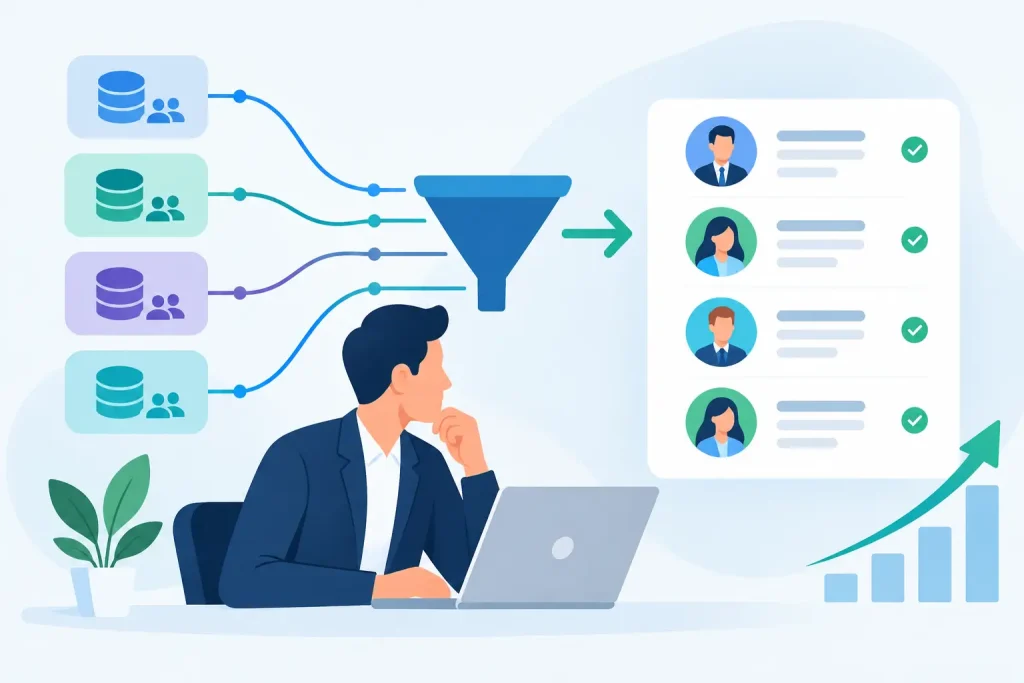
Some suppliers sell pre-built lists with broad labels such as UK directors or construction companies. These may have a place when your market is genuinely wide, but they are rarely the best answer for a focused campaign. A tailored selection should allow you to combine criteria rather than accept a generic category.
For example, an HR consultancy might need organisations in England and Wales with 25 to 250 employees, excluding sectors it cannot serve, then identify HR and managing director contacts. A software provider selling into education may need a separate approach for academies, colleges and independent schools. The value comes from the match between the record and the campaign, not from buying a bigger file.
Ask for a clear description of the selection logic, available contact fields and exclusions. It should be possible to suppress existing customers, competitors, unsuitable regions or contacts already in your CRM. This protects budget and avoids the awkwardness of prospecting people you already know.
Compare value, not just price per record
The cheapest quote often looks attractive because data is easy to reduce to a unit price. That calculation misses the cost of poor targeting. If a sales team spends days calling unsuitable businesses, or an email platform flags high bounce rates, the apparent saving disappears quickly.
When comparing proposals, consider the total commercial value: how closely the data matches your ideal customer, the contact fields included, the level of verification, the ability to refine the selection and the support available after purchase. A smaller, better-defined list can outperform a larger generic one because it gives your team fewer dead ends and a more relevant reason to make contact.
Request a record count based on your actual brief, not a catalogue total. Then assess whether the volume is realistic for your available sales capacity. There is little value in purchasing 20,000 contacts if your team can follow up only a fraction while the rest become less current. Phased purchasing can be the more controlled option, particularly when testing a new sector or proposition.
Look for a broker that acts as a practical partner
Data brokerage should not feel like an anonymous download. The best suppliers understand that campaign results depend on more than a spreadsheet. They can help refine an audience, identify sensible decision-maker titles, advise on data fields and spot weaknesses in a proposed selection.
This matters most when your offering is specialised. A broker with access to independent data sources can often build a more appropriate audience than a one-size-fits-all platform. It also provides flexibility when an initial segment is too broad, too narrow or missing a key variable.
Before buying, judge the quality of the conversation. Does the supplier ask about your proposition, past campaigns, geography and preferred channel? Can it explain the difference between company-level records and named contacts? Does it provide a straightforward quotation rather than hiding essential information behind vague promises? These are useful signs of whether you will receive practical support when you need it.
AD Marketing Ltd takes this consultative approach because a list should be selected for the campaign in front of you, not pulled from a shelf without thought. Three decades of market experience are most valuable when they help turn a broad prospecting idea into a workable audience.
Questions worth asking before you place an order
Use these questions to separate credible data brokers from suppliers selling volume without substance:
- What sources and verification processes sit behind these records?
- Which fields are included, and when were the key contact details last checked?
- Can the selection be filtered by sector, location, size, job title and other relevant criteria?
- What information can you provide to support GDPR due diligence and lawful marketing use?
- How are inaccurate records handled, and what replacement terms apply?
- Can you remove my existing customers, prospects and exclusion lists before supply?
- Will someone review my campaign brief and recommend the most suitable data selection?
The answers should be direct, specific and consistent. If a supplier avoids questions about sourcing, compliance or data quality, that uncertainty is part of the product you are being asked to buy.
Test, measure and refine the next purchase
Even well-selected marketing data should be measured against your own results. Track delivery and bounce rates for email, contactability for calls, response by sector, appointment rate and eventual revenue. Keep these results by segment, rather than judging an entire purchase on one overall figure. You may find that one job title, region or company-size band produces far stronger returns than another.
Feed that learning into the next selection. Over time, this creates a more precise prospect profile and makes each data purchase more productive. Choosing a broker is therefore not a one-off procurement task. It is the start of a better controlled approach to outbound marketing, where accurate records, relevant targeting and proper follow-up give your budget a fair chance to perform.