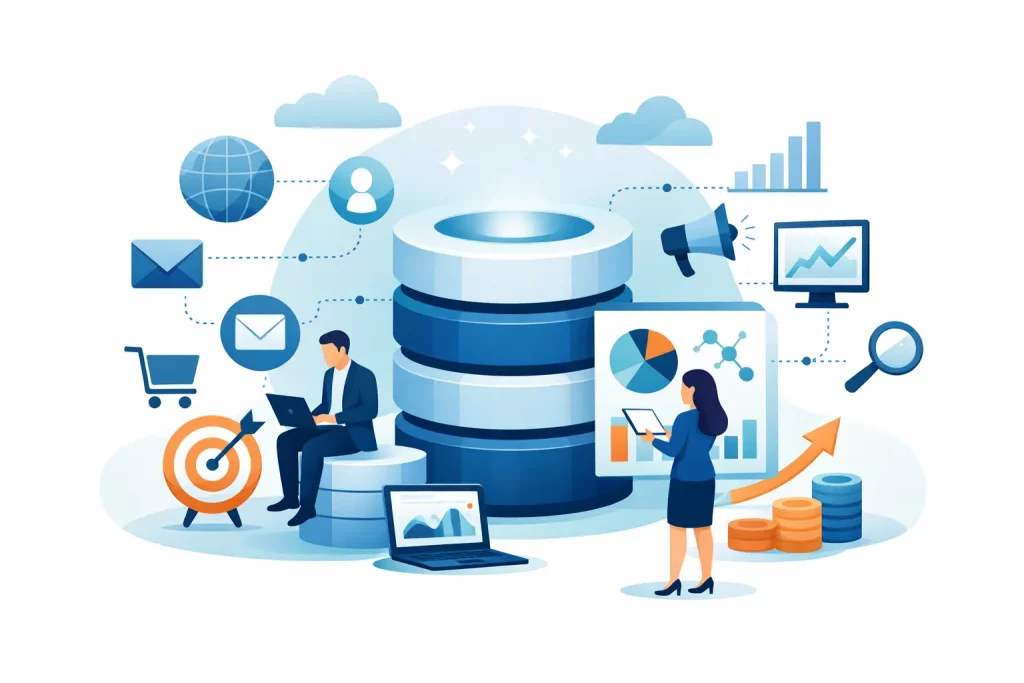
A campaign can look strong on paper and still underperform for one simple reason – it is aimed at the wrong people. That is why so many businesses ask what is database marketing when they are trying to improve lead generation, reduce wasted spend and reach better prospects. In practical terms, it means using structured customer or prospect data to target marketing more accurately, rather than relying on broad, generic outreach.
For UK businesses under pressure to deliver enquiries, appointments and sales, database marketing is not a theory exercise. It is an operational tool. When the data is relevant, current and compliant, it helps sales and marketing teams contact the right people, with the right message, through the right channel.
What is database marketing in simple terms?
Database marketing is the use of stored data about individuals or organisations to plan, segment and deliver marketing activity. That data might include company name, industry, turnover, location, employee size, named contacts, job titles, telephone numbers, email addresses, buying indicators or previous interaction history.
The point is not simply to hold records. The point is to make those records usable. A database becomes valuable when it helps a business identify who to target, who to exclude, how to personalise messaging and where budget is most likely to produce a return.
For example, a software provider selling to finance directors does not need a huge untargeted list of businesses. It needs a well-selected database of organisations that fit its ideal customer profile, with accurate decision-maker details and enough firmographic information to support a focused campaign. That is database marketing in action.
Why database marketing matters for lead generation
Most outbound marketing fails at the data stage, not the creative stage. If the audience selection is poor, even a well-written email or a capable telesales team will struggle. Database marketing improves this by narrowing activity to records that are more likely to convert.
That has a direct commercial benefit. Better targeting means fewer irrelevant sends, stronger response rates, more productive calling and lower acquisition costs. It also helps teams avoid wasting time on contacts that were never suitable in the first place.
This is especially relevant for businesses buying external data. A generic bulk file may look cost-effective, but if the records are outdated or badly segmented, the real cost shows up later in poor campaign results. A tailored database usually performs better because it is built around a specific market, job function or buying profile.
The data used in database marketing
The exact make-up of a marketing database depends on the campaign. A B2B direct mail campaign may need company names, postal addresses and sector codes. An email campaign may require named contacts, job titles and verified business email addresses. A telemarketing exercise will usually need direct dials or switchboard numbers alongside enough company information to support a relevant conversation.
In most cases, useful database marketing relies on a mix of contact data and segmentation data. Contact data tells you how to reach someone. Segmentation data tells you why they are a suitable target.
That distinction matters. A long list of names and email addresses is not automatically a good marketing database. Without filters such as sector, turnover, geography, staff size or role seniority, it becomes harder to prioritise spend and tailor the message. Quality targeting comes from combining reachability with relevance.
Database marketing is not just for existing customers
Some businesses hear the term and assume it only refers to CRM activity with current customers. That is one part of it, but not the whole picture. Database marketing covers both customer databases and prospect databases.
Customer data can help with retention, upselling, reactivation and account development. Prospect data supports new business activity, lead generation and market expansion. For many growing businesses, prospect database marketing is the more urgent requirement because they need a reliable flow of new opportunities.
This is where external data supply becomes important. If your internal records are limited, outdated or too narrow for your growth plans, purchasing a tailored marketing list can give your campaign a faster and more commercially useful starting point. The key is to buy data selected for your market, not just volume for the sake of it.
What good database marketing looks like
Good database marketing starts with a clear audience definition. Before any records are selected, you need to know who matters most. That may mean choosing by sector, company size, region, turnover, public sector type, education setting or a particular job title.
From there, the database should support the way you actually market. If your campaign depends on email, the data must include suitable and compliant business email contacts. If your sales team works the phones, accuracy of telephone numbers and contact roles becomes more important. If direct mail is part of the mix, postal quality and business classification carry more weight.
The strongest database marketing campaigns also involve regular refinement. Records are tested, response patterns are reviewed and future selections are tightened based on what performs. In that sense, database marketing is not a one-off purchase. It is an ongoing process of improving relevance and return.
What can go wrong?
The biggest problem is poor data quality. Inaccurate, stale or loosely targeted records create obvious issues – bounced emails, unproductive calls, returned post and weak response rates. They also create less visible damage by distorting campaign reporting. If the data is wrong, your decisions about channel performance and audience fit may be wrong too.
Compliance is another concern. Businesses need to understand how data can be used lawfully and responsibly, particularly for UK marketing activity. GDPR compliance is not a marketing extra. It is part of responsible campaign planning. That means knowing where the data came from, how it has been sourced, what permissions or lawful basis apply, and how the records should be used across different channels.
There is also a targeting trade-off. A very broad database may give you scale but low relevance. A highly filtered database may improve quality but reduce reach. The right balance depends on your offer, sales cycle, budget and channel strategy. A specialist broker or data supplier should help you make that judgement rather than simply pushing the largest file available.
Buying data for database marketing
If you are considering purchasing data, the most useful question is not how many records you can get. It is whether the records match your actual campaign objective.
A business promoting HR software to mid-sized employers needs different data from a training provider targeting schools, or a contractor looking for office relocation leads. The more precisely the data is matched to the campaign, the more likely it is to support meaningful outreach.
That is why tailored list building usually outperforms off-the-shelf databases. A selected file based on sector, job title, geography and company profile gives sales and marketing teams something workable. It also makes your messaging more specific, which improves response.
When assessing a supplier, data quality and advisory support matter just as much as volume. You should expect clarity on how records are sourced, how recently they have been checked, what fields are available and how the file can be used. If the supplier understands market targeting rather than simply list fulfilment, that usually leads to better campaign outcomes.
Database marketing and ROI
The reason database marketing remains valuable is simple – it makes marketing spend more accountable. Instead of sending the same message to a broad audience and hoping something sticks, businesses can focus budget on higher-fit prospects.
That does not guarantee immediate results. Response rates still depend on offer, timing, messaging and sales follow-up. But good data improves the odds significantly. It shortens the distance between campaign activity and commercial return.
It also helps with planning. Once you know which sectors, job titles or company sizes respond best, you can invest more confidently in the next campaign. Over time, the database becomes more than a contact file. It becomes part of your decision-making process.
Is database marketing right for your business?
If you rely on outbound prospecting, account-based targeting, telemarketing, direct mail or email campaigns, the answer is usually yes. The real question is what type of database marketing support you need.
Some businesses need better use of their existing CRM. Others need fresh, campaign-ready prospect data because their internal records are too limited. Many need both. In practice, the most effective approach often combines internal customer insight with external data selected to match a clearly defined target market.
For businesses that need dependable outreach data rather than generic records, working with an experienced supplier can save both time and budget. A company such as AD Marketing Ltd can help shape selections around real campaign goals, whether you need B2B contacts, public sector records, education data or specialist leads with a stronger fit for direct marketing activity.
The value of database marketing is not in owning a large spreadsheet. It is in having accurate, relevant data you can actually use to reach better prospects, run tighter campaigns and make each marketing pound work harder. If your current targeting feels too broad, too dated or too expensive to sustain, that is usually the point where better data starts paying for itself.