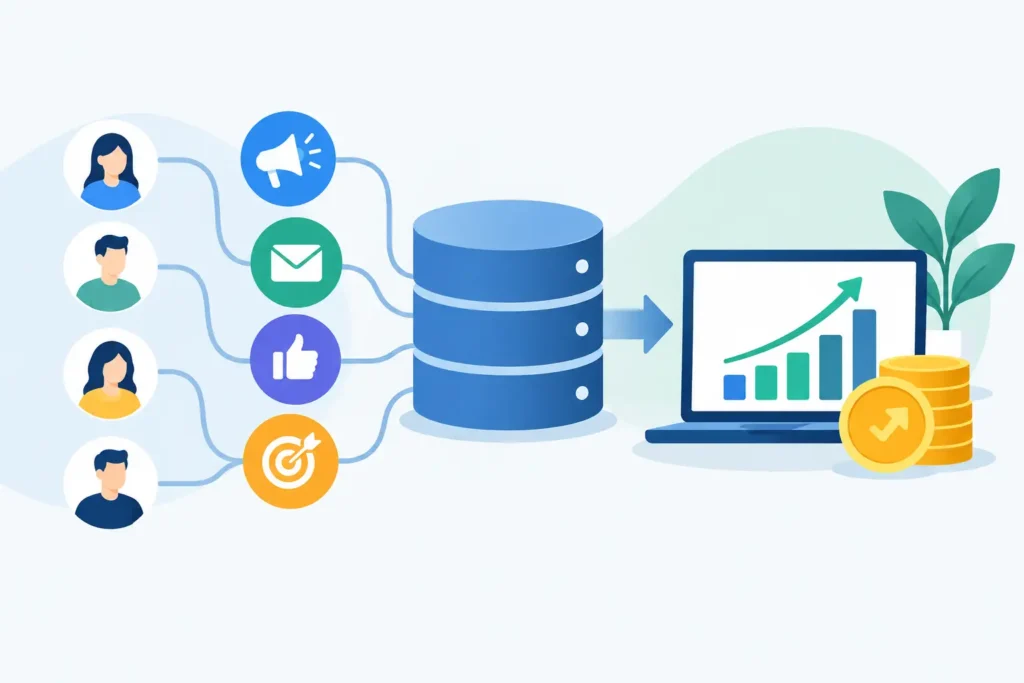
A campaign can fail long before the copy is written or the sales team picks up the telephone. If the records are old, the job titles are wrong, or the audience has no reason to buy, even a well-funded campaign becomes wasted spend. The right business databases give your team a practical starting point: named decision-makers, relevant organisations and the contact channels needed to turn a defined market into a workable prospect list.
For UK businesses buying B2B data, the objective should not be to acquire the largest possible file. It should be to purchase a focused, compliant dataset that matches the offer, territory, buying role and campaign method. That distinction has a direct effect on response rates, sales productivity and return on investment.
What a Useful Business Database Should Contain
A business database is more than a spreadsheet of company names and generic inboxes. For outbound activity, its value lies in how accurately it helps you identify, reach and prioritise the people most likely to have responsibility for the service or product you sell.
The required fields depend on the campaign. A telemarketing team may need direct-dial or switchboard telephone numbers, job titles, company size and sector. An email campaign may require named contacts, business email addresses and clear segmentation fields. Direct mail activity may depend on postal addresses, site locations and organisation type. In many cases, a combined approach works best, allowing sales teams to follow an email with a relevant call or use postal activity to support a higher-value conversation.
A campaign-ready B2B contact database will commonly include company name, postal address, telephone number, contact name, job title, email address, SIC or industry classification, employee size and turnover band where available. More specialist selection may include multi-site organisations, public sector bodies, schools, care homes, construction firms, office movers or businesses planning renovation work.
More fields are not automatically better. If a field does not support targeting, personalisation or follow-up, it can distract from the real task of selecting a viable audience. The useful question is: what information will help your team decide who to contact first and what message to send?
Buy Business Databases for a Defined Audience
Generic bulk records can look attractive on a cost-per-thousand basis, but they often create expensive inefficiency. A list of 50,000 mixed businesses is of limited use to a provider that sells only to finance directors in South East manufacturers with 50 to 250 employees. Relevance is what protects campaign budget.
Start with the commercial profile of your best customers. Consider the sectors that produce the strongest margins, the typical organisation size, the regions you can serve, and the job functions involved in the buying decision. A managing director may be the right contact for a small company, while a larger business may require a facilities manager, IT director, procurement lead or marketing manager.
Then define the trigger or need behind the campaign. For example, a workplace supplier may target organisations moving office or undertaking refurbishment. A software provider may seek companies of a particular size that employ an operations or finance lead. A training company might focus on HR, learning and development, or senior leadership contacts within selected industries.
This is where tailored business data lists earn their place. Rather than forcing a broad file into a campaign after purchase, you can specify the market before the data is selected. The result is a smaller, more commercially useful audience that sales and marketing teams can act on with confidence.
Select the Right Decision-Maker, Not Just the Right Company
Company-level targeting is only half the job. A good organisation is still the wrong prospect if the contact has no influence over the purchase.
Job title selection should reflect how the decision is made in that sector. For some services, owner-managers and directors are appropriate. For others, the operational user, budget holder and procurement contact all play different roles. Buying a list with only one senior title can be efficient for a simple offer, but it may miss the person who feels the day-to-day problem.
It is often sensible to test two related job functions rather than assume one is correct. A measured test across carefully chosen segments can show whether a message performs better with directors, department heads or managers. That is a more reliable basis for future spend than a broad campaign with no clear learning.
Data Quality Is a Cost-Control Measure
Poor data does more than cause a few bounced emails. It uses up sales time, damages confidence in a campaign and makes performance reporting misleading. If half the calls reach irrelevant contacts or disconnected numbers, your team may conclude that the proposition is weak when the real problem is the list.
Before purchasing a B2B contact database for sale, establish how the records are sourced, maintained and selected. Ask whether the supplier can explain the available contact fields, the geography covered, the level of job-title targeting and any exclusions that can be applied. A supplier should also be able to discuss the practical limits of the data rather than promise impossible perfection.
No business database is static. People change jobs, firms relocate, departments are reorganised and trading status changes. Freshness matters, but so does the ability to tailor a file around your current brief. A supplier with access to independent sources can often build a more precise selection than a one-size-fits-all database product.
The sensible approach is to treat data as a working marketing asset. Keep campaign outcomes, flag unsuitable records, maintain suppression files and feed sales insight back into the next selection. Over time, this gives you a clearer picture of the companies and contacts that genuinely convert.
GDPR-Compliant Data Lists UK Buyers Can Use Responsibly
Compliance should be part of campaign planning, not an afterthought once the data has been purchased. Businesses seeking GDPR-compliant data lists in the UK need to consider both the quality of the supplier’s processes and their own intended use of the information.
The UK GDPR and the Privacy and Electronic Communications Regulations affect how personal data is processed and how electronic marketing is sent. The appropriate basis and channel rules can vary depending on whether you are contacting a corporate subscriber, an individual, a sole trader or a partnership. Your message, suppression process and privacy information also matter.
A responsible data provider can help buyers understand the type of records available and the considerations around a proposed campaign. However, the buyer remains responsible for ensuring its marketing activity is lawful, transparent and properly managed. This includes maintaining opt-out records, providing a clear unsubscribe route for email activity and ensuring internal teams do not repeatedly contact people who have asked not to hear from you.
Compliance and performance are closely connected. Clear targeting reduces irrelevant outreach, while accurate records make it easier to manage preferences properly. The aim is not simply to tick a legal box. It is to run campaigns that are credible to the people receiving them.
Match the Database to the Marketing Channel
A single list can support several channels, but each channel places different demands on the data and the campaign plan. Email marketing needs a strong reason to open and a message that earns attention quickly. Telephone activity needs accurate numbers, meaningful job titles and a call team equipped to handle objections. Postal marketing benefits from a tangible offer and can work particularly well for local, high-value or hard-to-reach prospects.
For email, avoid treating volume as the main metric. Smaller, tightly segmented sends usually make it easier to test subject lines, offers and sector-specific copy. For telemarketing, prioritise the contacts most likely to have a current need and give callers context on the company, role and proposition. For multi-channel activity, sequence the contact rather than sending every message at once.
The best channel depends on the offer, sale value and buying cycle. A low-cost service may suit email-led outreach, while a complex B2B proposition often needs telephone follow-up and several relevant touchpoints. There is no universal answer, but there is a clear benefit in buying data that allows the campaign to adapt.
Questions to Ask Before You Purchase Data
Before committing budget, be specific with your data brief. A worthwhile discussion with a supplier should cover your ideal customer, the roles you need, the locations you serve, the sectors to include or exclude, and the fields required for your campaign.
Ask how the data will be tailored, whether records can be suppressed against your existing customer and prospect files, and what support is available after delivery. It is also sensible to ask about minimum order volumes and whether a test selection is possible. A test is particularly useful when you are entering a new vertical, changing your proposition or trialling a new channel.
AD Marketing works with businesses that need practical data selection rather than anonymous, off-the-shelf records. With a clear audience brief, a tailored business database can give marketing teams a better route into the accounts that matter, while helping sales teams spend less time chasing dead ends.
The most productive next step is to define your next campaign in plain commercial terms: who needs the offer, who signs it off, where they are based and what action you want them to take. Once those answers are clear, the right data selection becomes far easier to buy and far more likely to pay for itself.