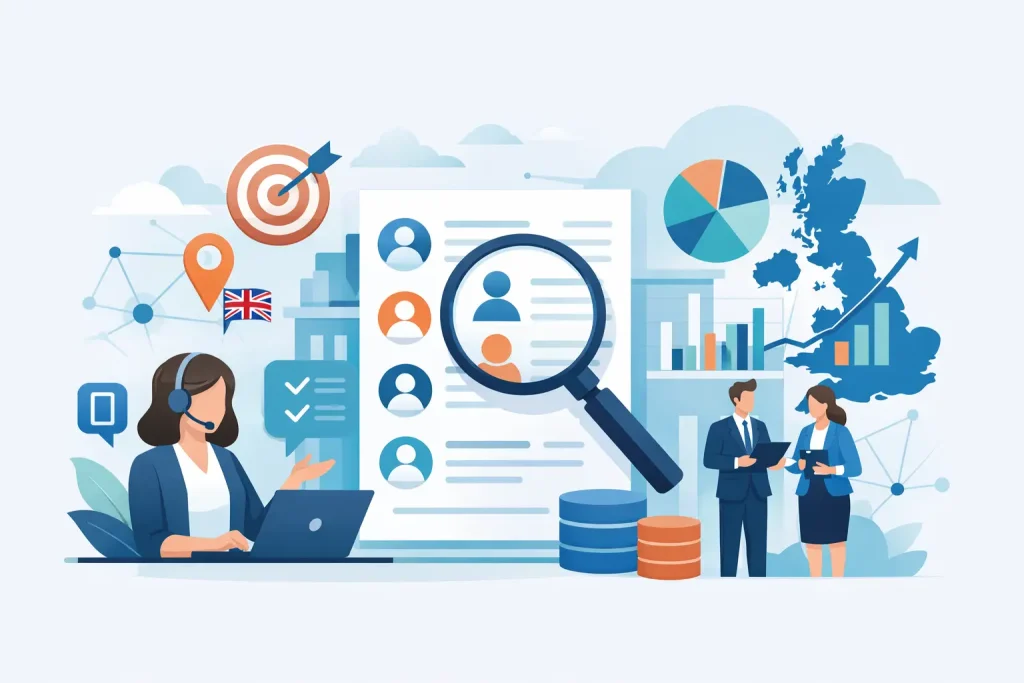
A calling team can lose half a day reaching unsuitable businesses, outdated contacts and numbers that never connect. That is why the best telemarketing data companies do more than sell a large volume of records. They provide campaign-ready business intelligence that helps sales teams speak to the right organisations, departments and decision-makers from the first dial.
For UK businesses buying B2B data, the right supplier should make targeting more precise, compliance easier to manage and campaign spend more accountable. The lowest headline price is rarely the best value if a substantial share of the file is irrelevant, out of date or missing the contact details your team needs.
What Separates a Good Data Supplier From a Useful One
Telemarketing data is often sold as a commodity, but campaign performance depends on the detail behind each record. A broad business directory may contain thousands of company names, yet provide little help when your objective is to reach operations directors at manufacturers with 50 to 250 employees in a defined postcode area.
A useful data supplier starts with the campaign brief. They should be able to build a selection around industry, location, company size, turnover where available, job title, department and contact channel. For some campaigns, a company switchboard number is sufficient. For others, named senior contacts and direct dial numbers are essential. These are different requirements and should not be priced or supplied as though they are the same product.
The strongest providers are also clear about data coverage. No business database is perfect, particularly where companies are newly formed, rapidly growing or operating across multiple sites. What matters is whether the supplier can explain what is included, when records were checked and how the data is likely to perform for your specific audience.
How to Assess the Best Telemarketing Data Companies
There is no single best supplier for every campaign. A national recruiter calling local firms has different needs from a software company targeting finance directors at large enterprises. The best telemarketing data company for your business is the one that can supply the right records, in the right format, with sensible guidance before your campaign begins.
Start by assessing the quality of targeting. Ask whether the supplier can narrow the file by meaningful commercial criteria rather than relying only on a broad sector label. A construction business, for example, may need to distinguish between contractors, architects, housebuilders, property developers and specialist trades. A generic construction list will create unnecessary call volume and poor conversion rates.
Next, consider contact depth. Company name, address and main telephone number may be enough for geographical prospecting or local services. Higher-value B2B sales usually benefit from named contacts, job functions, seniority, email addresses and, where available, direct dial telephone numbers. The goal is not to collect every possible field. It is to purchase the fields that give your callers a credible route to the relevant person.
Freshness should be discussed in practical terms. Businesses change names, relocate, close sites and appoint new decision-makers. Contact information can age quickly, particularly in sectors with high staff turnover. Ask how often key information is reviewed, whether records are tested in-house and what checks are made before delivery. A supplier that speaks openly about data maintenance is generally more useful than one making vague claims about having millions of contacts.
Compliance Is Part of Data Quality
For UK telemarketing, compliance cannot be treated as an afterthought. GDPR-compliant data lists should be supplied with a clear understanding of the intended marketing use, but compliance also depends on how your organisation uses the data.
Business calls are subject to rules around the Telephone Preference Service and Corporate Telephone Preference Service, alongside UK GDPR requirements. Calls to sole traders and individuals require particular care because their details may be treated as personal data and they may be registered with TPS. Corporate subscribers can also register with CTPS. Your campaign should be screened appropriately, suppression preferences respected and call records maintained.
A reputable supplier should be able to explain the provenance of its data and support responsible targeting. However, no data company can remove the buyer’s responsibility to establish a lawful basis, assess legitimate interests where applicable, provide privacy information and manage opt-outs properly. If a supplier suggests that a list is automatically risk-free simply because it is described as GDPR compliant, treat that as a warning sign.
For many B2B campaigns, a carefully targeted legitimate interests approach may be appropriate, but it depends on the audience, the data used, the nature of the offer and the expected impact on the individual. Good targeting helps here too. A relevant call to a suitable job role is easier to justify commercially and less likely to damage your reputation than untargeted volume calling.
Match the Data to the Calling Strategy
The most productive telemarketing datasets are built around how the sales team will actually work. Before buying data, decide whether your campaign is designed for broad market coverage, named-account prospecting or a focused response to a specific trigger.
Sector and territory campaigns
If you sell a service with a clear geographic or sector fit, a segmented company database can give your team a manageable calling universe. A commercial cleaning firm may need offices within a certain travel radius. A training provider may want education establishments, public sector bodies or businesses above a defined employee threshold. In these cases, accurate company classification, postcodes and telephone numbers matter more than a large number of senior contacts.
Named decision-maker campaigns
Where sales value is high and the buying process is more complex, named contacts become more important. Software providers, consultancies, managed service firms and specialist suppliers often need directors, heads of department or procurement contacts. A tailored B2B contact database for sale should allow you to specify relevant job titles and exclude roles with no buying influence.
Be realistic about job-title selection. Asking only for managing directors can restrict your reach unnecessarily, while requesting every managerial title can weaken the campaign. A knowledgeable data provider can help create a title brief that reflects who actually influences the purchase.
Multi-channel outreach
Telemarketing works well alongside email and direct mail when the same audience is selected carefully. The initial call can be supported by a relevant email, while postal outreach can give high-value prospects a tangible reason to recognise your business. If this is your plan, purchase email marketing lists and telephone data as part of one coordinated brief rather than sourcing disconnected files from different vendors.
That approach makes it easier to control duplicate records, align messaging and measure which channels create appointments. It also prevents callers from working from an incomplete file while marketing activity targets a wider, inconsistent audience.
Questions to Ask Before You Purchase Data
A serious supplier should welcome detailed questions. Before committing budget, establish the commercial and operational facts behind the dataset:
- Can the data be selected by sector, postcode, employee size, turnover band, job title and department?
- Which contact fields are included: named contact, main line, direct dial, mobile number, email address and postal address?
- When was the data last checked, and what verification process is used?
- Can the supplier identify likely record volumes before you buy?
- Has the data been screened or prepared for the intended marketing channel, and what additional suppression work remains your responsibility?
- Is the file supplied in a format that imports cleanly into your CRM or calling system?
- Can the supplier remove existing customers, competitors, duplicate domains or excluded sectors before delivery?
The answers should be specific. “UK business data” is not a specification. A proper specification sets out the target market, required fields, exclusions, delivery format and expected record count. It gives both parties a clear basis for judging whether the data has met the brief.
Look Beyond Price Per Record
Price matters, especially when marketing budgets are under pressure. Yet price per record alone tells you very little about likely return. A cheap file that produces poor connection rates, repeated gatekeeper calls and irrelevant conversations creates hidden costs in staff time and lost opportunity.
A more targeted list may cost more per record but require fewer calls to produce a qualified conversation. This is especially true for specialised sectors, senior decision-maker data and campaigns requiring fresh contact information. The sensible comparison is cost per qualified lead or appointment, not simply cost per thousand records.
It is also worth considering service. Large self-service platforms can suit businesses that already have a detailed data brief and internal resource to manage selection, cleaning and compliance. Smaller specialist brokers can be a better fit when you need advice on market definition, job titles, data fields or campaign exclusions. AD Marketing Ltd works in this more consultative way, helping buyers specify tailored records rather than forcing a campaign into a generic database category.
Buy Data That Gives Callers a Fair Chance
The purpose of telemarketing data is not to inflate a dialling list. It is to give capable salespeople a credible reason to contact businesses that are likely to need what you offer. That means selecting relevant organisations, reaching appropriate roles and keeping data current enough to support confident conversations.
Before your next campaign, write down the exact companies you want to reach, the person your callers need to speak to and the information they need on screen. A supplier that can turn that brief into a precise, compliant dataset is far more valuable than one that simply offers the biggest file.